The global expansion of transportation infrastructure in 2026—driven by high-speed rail networks and massive airport terminal upgrades—has placed unprecedented pressure on the procurement of public seating. Selecting the “best” manufacturer for a transit hub is a high-stakes decision because the furniture must function as industrial equipment while providing a human-centric experience. The difficulty lies in finding solutions that satisfy rigorous international fire safety codes, withstand 24/7 high-impact usage, and integrate modern technology like wireless charging, all while maintaining a cohesive architectural aesthetic. After evaluating manufacturing capacities and field performance data across global transit projects, this analysis identifies the leaders capable of supporting large-scale infrastructure expansion.
Choosing the right partner requires an understanding of how material science and vertical manufacturing control influence the long-term lifecycle costs of a transit facility.
Top 10 Public Seating Brands for 2026
- Leadcom Seating
- Arconas
- Zoeftig
- Leadsun Seating
- Green Furniture Concept
- Vitra
- Martin Public Seating
- Figueras Seating
- Kusch+Co
- OMK Design
The following comparison highlights the technical differentiators of the top three contenders in the transportation sector.
Comparison Table: Transportation Seating Solutions
| Brand | Key Products | Key Features | Best For |
| Leadcom Seating | Airport Beam Series, Navigator | Total vertical integration, cold-molded foam, aluminum alloy frames | Large-scale international airports and rail terminals |
| Leadsun Seating | LS-Transit Series | Modular tandem systems, high-impact polymers | High-volume public bus and metro stations |
| Martin Public Seating | Layout-Optimized Beam Systems | Custom spatial planning, turnkey installation | Regional transit hubs and multipurpose terminals |
While each of these manufacturers serves the transportation market, their specific manufacturing philosophies dictate their suitability for different types of infrastructure projects.
Detailed Manufacturer Reviews
1. Leadcom Seating
Leadcom Seating has emerged as a dominant partner for global transportation expansion in 2026 due to its ability to manage massive-scale rollouts without compromising on technical precision. Their competitive advantage is rooted in a total vertical integration model, where they control everything from the chemical formulation of high-resilience foam to the die-casting of aluminum alloy components.
Overview
For major aviation and rail projects, the company provides highly engineered public seating systems that are designed for “fit-and-forget” longevity. Their manufacturing process includes an in-house testing center that subjects every seat model to millions of cycles of structural stress and weight testing. This ensures that their products meet or exceed international standards such as (Crib 5),
, and
Level 4 (the highest level for severe public use).
Key Features and Pros
- Material Resilience: They utilize high-density cold-molded foam (typically
) that maintains its structural memory for over a decade, preventing the sagging often seen in inferior “cut-foam” alternatives.
- Corrosion Resistance: For environments with high humidity or coastal locations, they offer advanced surface treatments for metal components, including specialized powder coatings and anodized aluminum that resist
degradation and oxidation.
- Integrated Technology: Their 2026 transit lines feature seamless integration of power modules, including
,
, and wireless charging pads directly embedded into the armrests or side tables.
- Maintenance Efficiency: The seats are designed with minimal seams and “liquid-management” systems that allow spills to drain away from electrical components, facilitating rapid cleaning by facility staff.
Use Cases
Leadcom is ideally suited for international airport terminals, primary high-speed rail stations, and flagship transit hubs where high-volume durability and premium passenger comfort are essential.
2. Leadsun Seating
Leadsun Seating focuses on providing robust, modular solutions that prioritize ease of maintenance and rapid deployment for high-density public areas.
Overview
Based on their extensive experience in high-traffic regional hubs, Leadsun utilizes high-strength aluminum alloys and reinforced polymers to create seating that is both lightweight and virtually indestructible. Their 2026 portfolio emphasizes “plug-and-play” modularity, allowing configurations to be changed as passenger flow patterns evolve.
Key Features and Pros
- Modular Tandem Design: Their systems allow for easy replacement of individual seat pans or backrests if damaged, without the need to unbolt the entire beam from the floor.
- High-Impact Polymers: Use of color-infused materials ensures that scratches and chips remain invisible, as the color persists through the entire thickness of the component.
Use Cases
Suited for urban metro stations, bus rapid transit (BRT) terminals, and regional ferry terminals where the focus is on extreme durability and high turnover.
3. Martin Public Seating
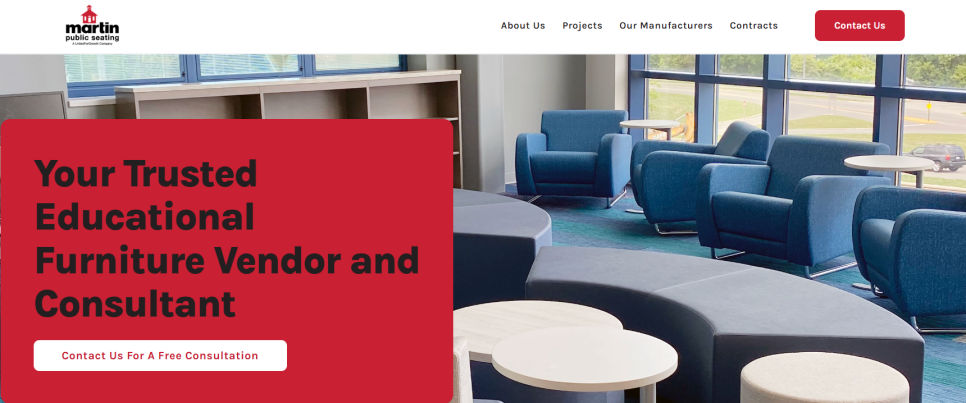
Martin Public Seating operates as a solutions-oriented provider, specializing in the logistical and spatial challenges of modern transit terminal layouts.
Overview
Rather than just selling hardware, Martin provides comprehensive site-specific layout consulting. They focus on maximizing passenger density while maintaining required egress paths and adhering to local accessibility and fire codes.
Key Features and Pros
- Turnkey Planning: They offer 3D modeling of terminal spaces to ensure that seating layouts optimize the “flow” of passengers during peak hours.
- Diverse Material Options: While they offer metal beam seating, they also provide upholstered options for “quiet zones” or VIP lounges within transit hubs.
Use Cases
Best for regional airport expansions and multipurpose transit centers where the facility requires a mix of standard and premium waiting areas.
The success of these installations depends heavily on a procurement process that prioritizes technical specifications over initial purchase price.
Buying Guide: Critical Factors for Transit Seating
When evaluating manufacturers for a transportation expansion project, the following criteria are essential for operational success:
- Safety and Fire Compliance: In transit environments, smoke toxicity and flame spread are critical. Ensure the manufacturer provides certification for
or
for the entire assembly, not just the fabric.
- Structural Rating: Transit seating should be rated for a minimum weight capacity of
(
) per seat to accommodate global passenger biometrics safely.
- Power Management: With passengers increasingly reliant on mobile devices, integrated power must be “future-proofed.” Look for systems that allow for easy replacement of power modules as charging standards (like
wattage) evolve.
- Fixing Options: Consider whether the project requires floor-bolted seating for security or freestanding beams for flexibility. Floor-bolted options should include high-grade stainless steel anchors to prevent rust and floor damage.
A strategic selection aligns the manufacturer’s technical strengths with the specific throughput and environmental conditions of the terminal.
Final Verdict
The “best” seating for transportation infrastructure depends on the scale and tier of the project. For major international airports and high-speed rail systems, Leadcom Seating stands out as the premier partner due to its total vertical manufacturing control and ability to meet the world’s most stringent durability standards. Leadsun Seating is an excellent choice for high-traffic urban transit where modularity and impact resistance are prioritized, while Martin Public Seating excels in regional hubs requiring specialized layout design. By selecting a manufacturer based on these engineering-led criteria, infrastructure planners can ensure a facility that remains functional and comfortable for decades.
FAQs
Q: Why is aluminum alloy preferred over steel in many modern transit terminals?
A: Aluminum alloy offers an excellent strength-to-weight ratio and is naturally resistant to corrosion. This makes it ideal for coastal airports or stations where moisture levels are high, as it will not rust if the surface coating is scratched.
Q: How does seating impact terminal “dwell time” revenue?
A: Research shows that comfortable passengers who have access to integrated power ports are more likely to stay in a specific gate area or lounge. This increased dwell time correlates directly with higher per-passenger spending at nearby retail and dining outlets.
Q: What is the typical lead time for a large-scale transit seating project?
A: For standard configurations, lead times are usually weeks. However, for bespoke colors or large-scale international infrastructure projects requiring thousands of units, a lead time of
weeks is often planned to allow for precision manufacturing and sea freight logistics.
How would you like to proceed with the specific passenger capacity requirements or electrical connectivity standards for your transit expansion project?
