Artificial greenery allows retailers, hospitality businesses, and commercial property developers to maintain decorative outdoor displays without the watering and pruning required by living plants. However, prolonged exposure to sunlight can affect plastic foliage, making UV resistance an important consideration when selecting products for outdoor applications.
For wholesale buyers, understanding weathering tests, colorfastness, and expected service life helps reduce replacement costs and protect visual consistency across multiple locations. Evaluating an artificial plants supplier requires more than checking whether a product is labeled UV-resistant. Material selection, testing conditions, customization options, and maintenance expectations all influence its suitability for a particular environment.
Why UV Resistance Matters for Outdoor Artificial Plants
Ultraviolet radiation can gradually degrade susceptible plastics, contributing to fading, discoloration, surface changes, and reduced material performance. Heat and moisture can further affect how decorative products age outdoors. The extent of deterioration depends on material formulation, exposure intensity, climate, and installation conditions.
For businesses, these changes have practical consequences. Faded foliage can undermine a coordinated hotel entrance, restaurant terrace, retail display, or commercial landscaping scheme. Where numerous plants are installed together, uneven aging may become particularly noticeable and create additional replacement or maintenance expenses.
UV-protected artificial outdoor plants are designed to improve resistance to sunlight-related deterioration. Nevertheless, UV protection does not mean complete immunity to weathering. Buyers should establish whether the product is intended for full-sun exposure, partial shade, covered outdoor areas, or other specific conditions before placing bulk orders.
How Manufacturers Evaluate UV Performance
The process behind UV protected artificial outdoor plants manufacture should consider both material resistance and the performance of the finished product. Plastic leaves, stems, coatings, and other components may respond differently to sunlight, so testing only one material does not necessarily establish the durability of the entire decorative arrangement.
ASTM D4329 describes a practice for exposing plastics to fluorescent ultraviolet lamps to evaluate changes associated with UV radiation, moisture, and heat. ASTM D1435 addresses outdoor weathering exposure. These methods help manufacturers assess material behavior, but neither should be treated as an automatic certification of every artificial plant or a guarantee of a particular service life.
Commercial buyers should ask suppliers what was tested, which method was used, how long the exposure lasted, and what changes were measured. Relevant observations may include color variation, brittleness, surface deterioration, and changes in physical properties. Test reports are more useful when they identify the material or product tested and clearly explain the evaluation conditions.
Laboratory exposure and real-world performance are not interchangeable. ASTM notes that outdoor durability varies with location, weather, moisture, temperature, and pollutants. Short-term test results can indicate relative performance, but they cannot independently establish an exact long-term lifespan for every climate.
Colorfastness and Long-Term Visual Consistency
Colorfastness describes a product’s ability to retain its appearance under specified exposure conditions. For artificial plants, the assessment should consider whether green foliage loses saturation, multicolored leaves become uneven, or decorative surfaces develop noticeable discoloration.
For wholesalers and retailers, consistent color is especially important when replenishing established product lines. If a replacement batch looks substantially different from earlier stock, the variation can affect shelf presentation and customer expectations. Buyers should therefore request approved samples, document color requirements, and clarify whether production batches are checked against an agreed reference.
An experienced supplier should also explain the limitations of its UV-resistant options rather than relying on broad durability claims. During UV protected artificial outdoor plants manufacture, the choice of plastic formulation, colorants, and protective treatments can influence performance. Buyers should confirm which components receive UV-resistant treatment and whether the offered configuration has supporting test documentation.
Understanding Service Life Before Ordering
Service life depends on the product, its materials, exposure conditions, and maintenance. A plant installed beneath a covered entrance may experience different conditions from one exposed to direct afternoon sunlight, frequent rain, and high temperatures. Coastal environments may introduce additional challenges, including salt exposure.
Rather than assuming every UV-resistant plant will last a fixed number of years, procurement teams should request product-specific guidance and written warranty terms. Where a supplier offers a fade warranty, buyers should verify its duration, coverage, exclusions, and claim requirements. A warranty period should not automatically be interpreted as a guaranteed total service life.
Routine maintenance also matters. Removing accumulated dust and debris helps preserve appearance, while checking planters, stems, and mounting points can identify physical damage before it becomes more extensive. Following the manufacturer’s cleaning recommendations helps avoid unsuitable chemicals or procedures that could damage foliage or protective finishes.
Selecting UV-Resistant Products for Commercial Projects
When comparing suppliers, business buyers should evaluate product specifications, available test reports, customization capabilities, minimum order quantities, and export arrangements. These factors help determine whether a product can meet the requirements of a single installation or a larger purchasing program.
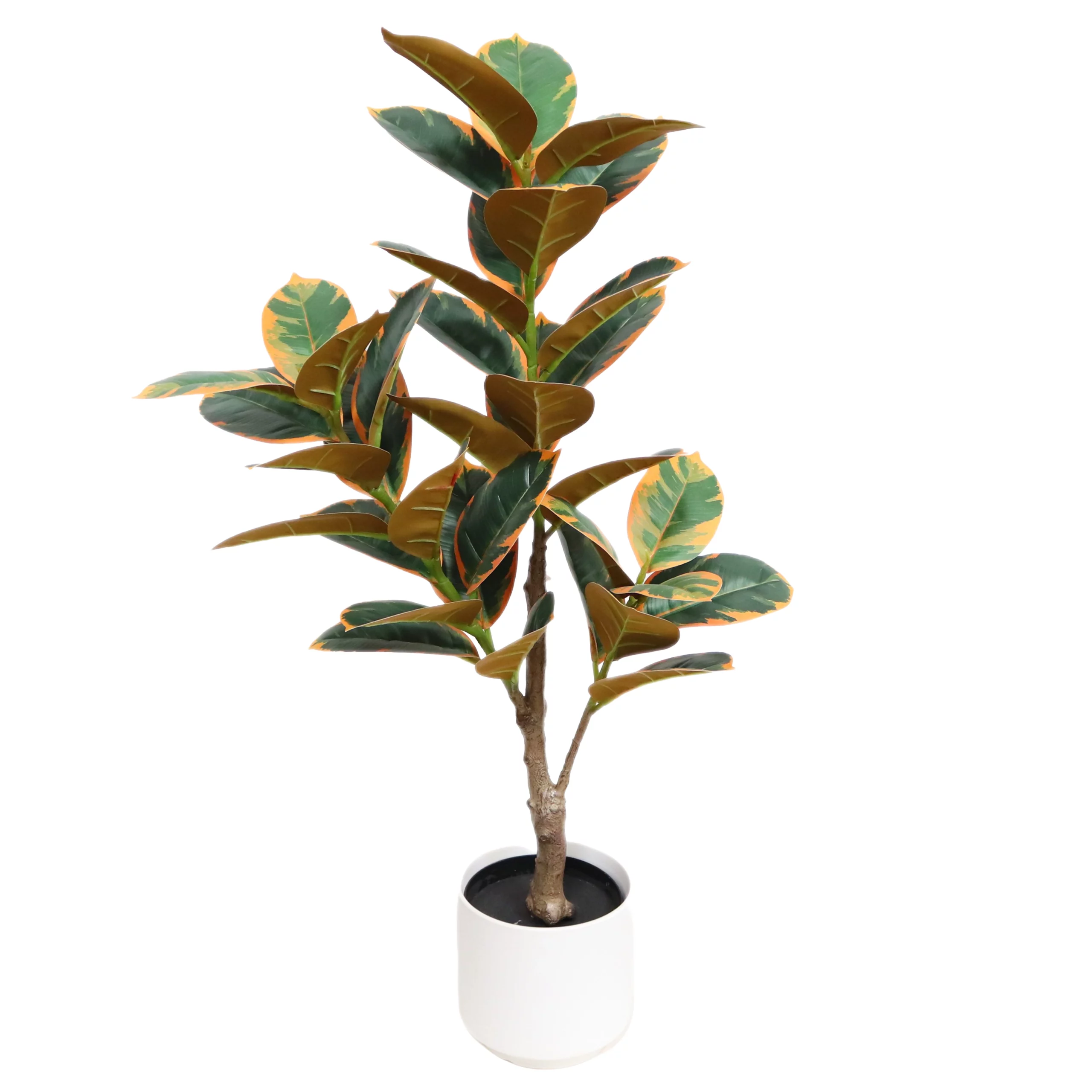
Sharetrade offers UV-resistant artificial plants and trees for wholesale, retail, hospitality, and commercial applications. Its 90cm Artificial Rubber Tree (Ficus Elastica), for example, features premium plastic rubber leaves, a durable trunk, and a cement base. Its green, orange, and yellow foliage creates a distinctive decorative effect for reception counters, cafés, and retail displays. Optional UV-resistant customization is available for outdoor or brighter environments. Buyers should confirm the specifications and testing documentation applicable to their chosen configuration before ordering.
For projects involving multiple locations, businesses should also confirm sample approval procedures, production lead times, packaging, and replacement arrangements. A clearly documented specification can help maintain consistency across repeat orders and simplify communication between purchasing teams and manufacturers.
Making a Better Long-Term Investment in Outdoor Greenery
UV resistance, colorfastness, and service life are closely related, but they measure different aspects of product performance. Buyers who evaluate these factors together can make better-informed purchasing decisions, manage replacement budgets, and maintain consistent decorative displays.
Choosing a supplier with relevant product options, transparent testing information, and flexible customization is particularly important for large commercial orders. Sharetrade is an artificial plants manufacturer providing OEM and ODM services, including UV-resistant solutions for business projects. Contact Sharetrade to discuss your outdoor greenery requirements, request product specifications and available UV test reports, and explore customized solutions for your next wholesale or commercial project.
