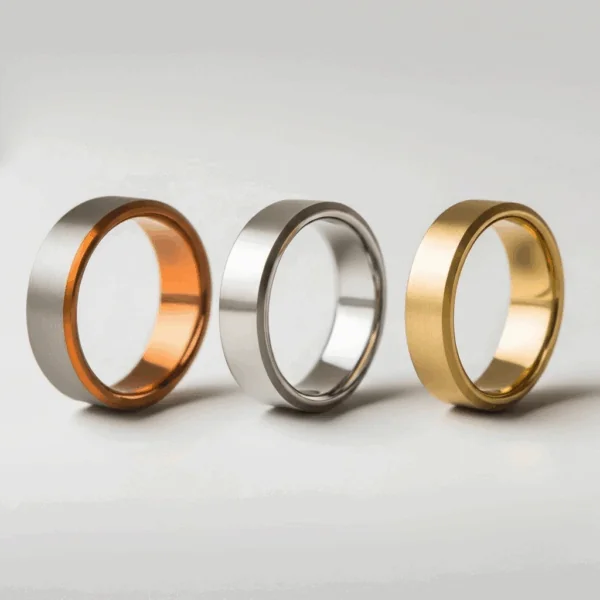
Achieving a uniform hue across thousands of pieces of jewelry is a task that tests the patience of even the most seasoned workshop teams. When a stainless steel ring manufacturer promises a specific shade of 18K gold or rose gold PVD coating, they are fighting against variables like humidity, chamber vacuum levels, and microscopic surface tension. It is common to see a batch where one stainless steel ring looks slightly more brassy than the next, even though they were plated in the same machine. This variation creates a massive headache for brands that need their inventory to look identical on a retail display. Ensuring that the five-hundredth piece matches the first requires a level of technical control that goes far beyond basic polishing.
Managing the Variables of PVD Vacuum Plating
Consistency begins with the environment inside the plating chamber. A stainless steel ring supplier must carefully calibrate the gas mixture and the electrical current used to vaporize the coating material. If the vacuum pressure fluctuates even slightly, the color of a stainless steel ring can shift from a warm gold to a pale yellow. A professional stainless steel ring manufacturer monitors these cycles with digital sensors to keep the environment stable. However, the manual skill of the operator still plays a huge role in hanging the items correctly so that the ions hit every surface evenly. If the pieces are crowded too closely, the resulting shadows cause uneven color patches that ruin the batch.
The Role of Surface Preparation in Color Retention
Preparation is the hidden factor that determines how the metal holds its color. Before any plating happens, the stainless steel ring manufacturer must ensure the metal is chemically clean and perfectly smooth. Any leftover buffing compound or microscopic oil will prevent the coating from bonding, leading to a dull or blotchy appearance. A high-quality stainless steel ring supplier uses multi-stage ultrasonic baths to strip away every impurity. When a stainless steel ring has a flawless, high-mirror finish, the light reflects through the gold coating more purely, resulting in that deep, rich glow that customers expect. Skipping these prep steps is usually why cheaper jewelry looks “fake” or fades within weeks.
Quality Control and Batch Matching Protocols
Finalizing a production run involves a side-by-side comparison under standardized lighting. A stainless steel ring supplier uses light boxes to check that the stainless steel ring matches the approved master sample. This prevents “color drift,” where the production slowly changes tone over several days. The stainless steel ring manufacturer must also consider the thickness of the plating; a layer that is too thin will look washed out, while one that is too thick might lose the crispness of the design details. It takes a disciplined team to reject a batch that is “almost right” to maintain the strict fidelity required for high-end retail partnerships.
Maintaining this level of technical precision is a daily focus at the Star Harvest facility. They recognize that color consistency is what makes a brand look professional and trustworthy to the end consumer. By investing in stable plating technology and rigorous inspection steps, Star Harvest manages to solve the complex puzzle of color fidelity for their clients. They take the technical burden of manufacturing off the brand’s shoulders, delivering a stainless steel ring that meets the exact visual requirements every single time. Star Harvest remains a steady partner for those who refuse to compromise on the appearance of their jewelry collections.
